

Description
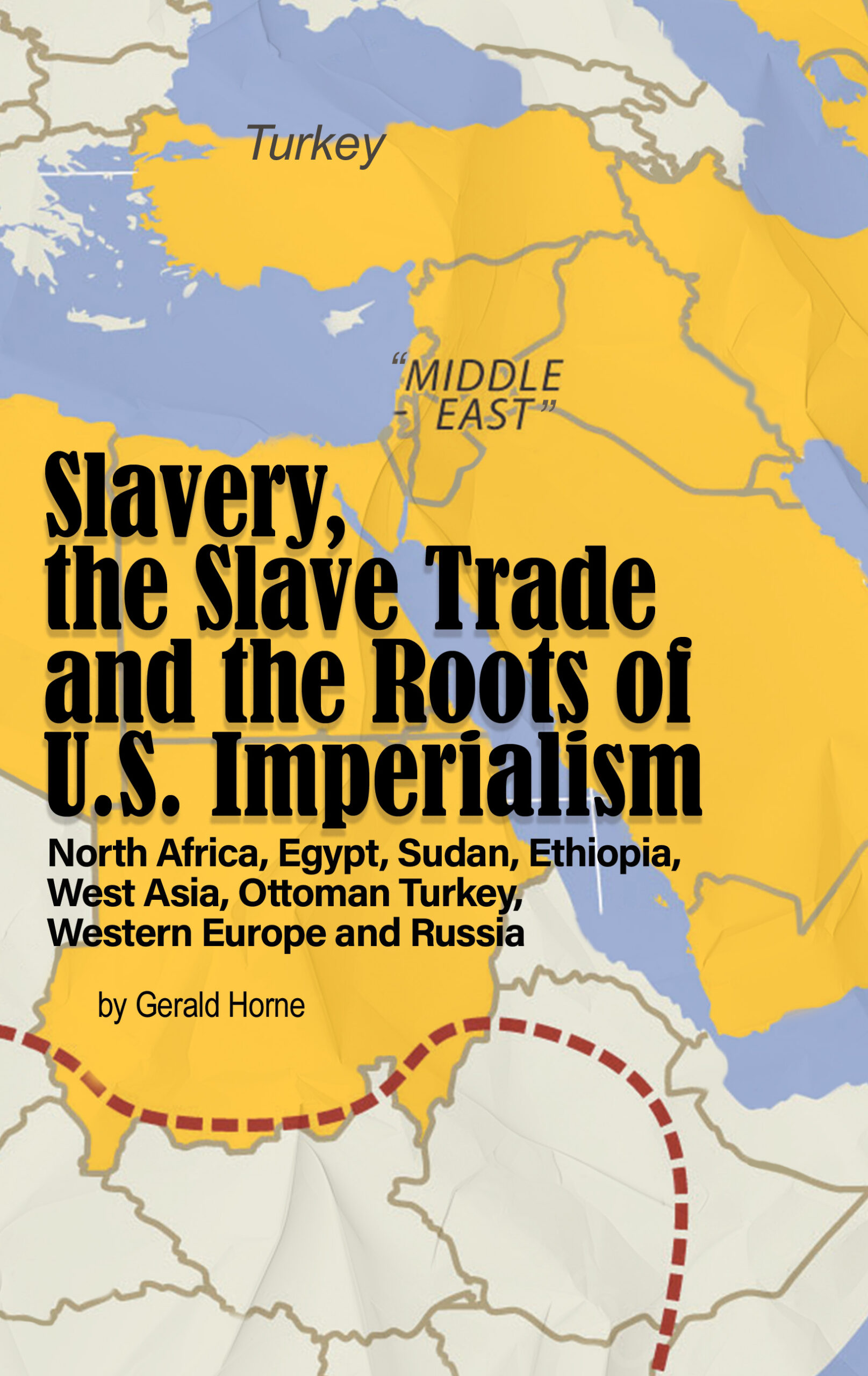
In 1875 Confederate military officers from Dixie were recruited by Egypt to lead an invasion of Ethiopia, which could have led to an expansion of the slave trade.
So begins this riveting history by Gerald Horne.
U.S. imperialism has diverse roots, Indigenous dispossession and enslavement (predominantly) of West Africans not least. Yet, after the Civil War, numerous U.S. nationals decamped to Africa to resume enslavement—including the buying of Africans—often in league with Cairo. Enslavement of Africans in West Asia (the “Middle East”) actually predated the trans-Atlantic versions. Similarly, when massive petroleum deposits were discovered in today’s Iraq and Iran at the beginning of the 20th century, a budding U.S. imperialism was poised to benefit given its pre-existing role in the region.
Horne’s story begins in the late 18th century with Euro-Americans being held captive by Algiers in particular. Pre-existing anti-Semitism was boosted when the allegation was made that this North African regime was backed by Jewish elites. Of course, Islamophobia was also prevalent in that Algerian rulers were predominantly Muslims. Anti-Christianity and the roots of Zionism also figure into this story, as does religious zeal of various sorts.
Fortunately, the growing abolitionist movement flexed its muscles; this potent force was aided immeasurably by Russia—a European power whose nationals were subjected to enslavement by Ottoman Turkey—which executed slave traders at a time when these evildoers were being coddled in Washington.
Similarly, a major reason that Ethiopia was able to vanquish repetitive invasions was because of military aid from Russia. This aid increased after the Bolshevik Revolution of 1917, which also led to anti-colonial Africans finding succor in Addis Ababa—today’s home of the African Union.
This book is essential reading for those seeking to understand and subdue imperialism today.


Reviews
There are no reviews yet.