

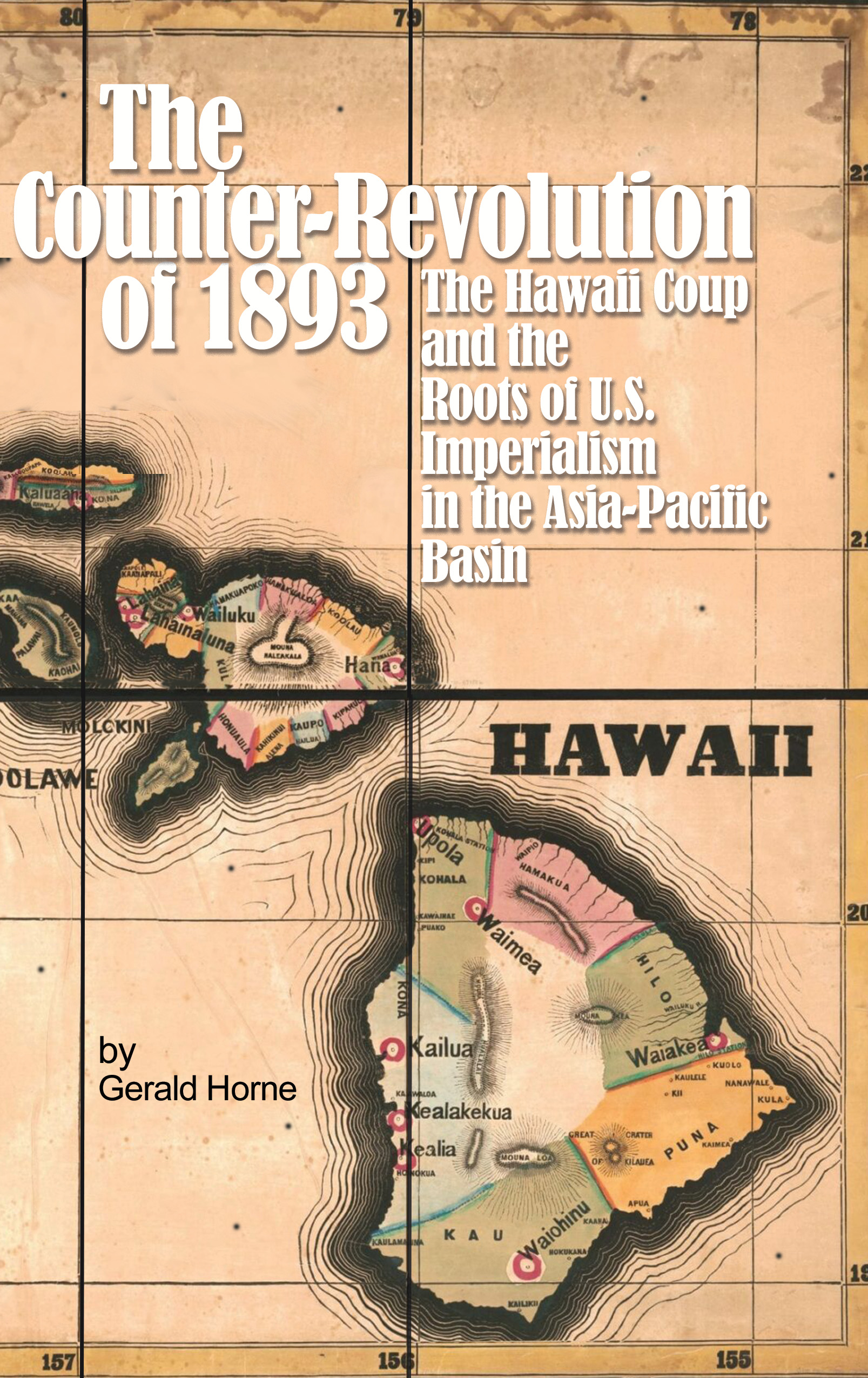
Description
In this riveting analysis of Pacific history, Gerald Horne outlines the roots of U.S. imperialism. As the U.S. Civil War concluded, Hawaii was ruled by a modernizing monarchy. There were relatively high rates of literacy, while the advent of electricity and telephones preceded their arrival in a good deal of the U.S.
The state also maintained scores of legations and wielded influence widely, where the regime’s example shaped the trajectory of Japan, as it retreated from feudalism. This led to a de facto alliance with Tokyo in an attempt to foil a rising U.S. imperialism.
The monarchy also sought to influence far-flung neighbors including Tahiti and Samoa which infuriated the major powers including Washington.
Finally in the 1890s, Euro-Americans across class lines, overthrew the monarchy—denounced as “Negroes”—and established an apartheid regime where the Indigenous and those of Japanese and Chinese ancestry were barred from voting. This was a prelude to the bloody 1898 war in the Philippines and the intensified version of U.S. imperialism, culminating in wars in Korea and Vietnam—and today’s confrontation with China.
Reviews
There are no reviews yet.