

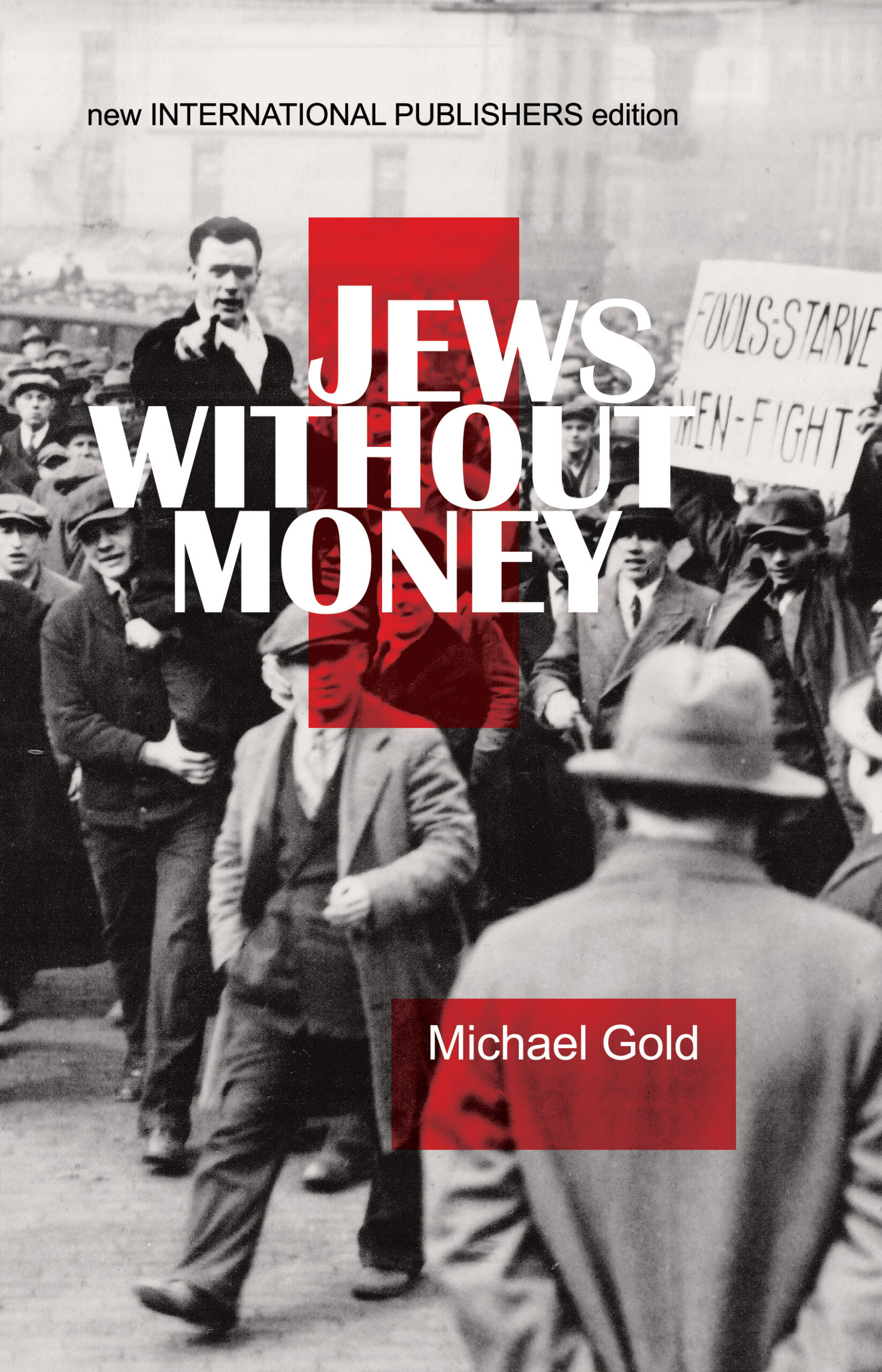
Description
“I can never forget the East Side where I lived as a boy.”
So begins Jews Without Money, Michael Gold’s 1930 novel of childhood in the tenements of Manhattan’s Lower East Side. Through the eyes of young Mikey, Gold renders a neighborhood of sweatshops and bedbugs, gangsters and prostitutes, pious elders and hungry children. His father,Herman, chases an American fortune that never arrives. His mother, Katie, whom Gold called the book’s heroine, holds the family together with labor and fierce tenderness.
Gold was a fixture of the bohemian left in the 1920s and 1930s. In Greenwich Village he wrote plays for the Provincetown Players, the company that launched Eugene O’Neill. At The Liberator, he shared the editor’s desk with Claude McKay, whose poetry helped open the Harlem Renaissance. He went on to edit New Masses, which gave Langston Hughes and a young Richard Wright a national platform. His friends included Dorothy Day, Elizabeth Gurley Flynn, Paul Robeson, and W.E.B. Du Bois–a young Pete Seeger called him his hero.
Published as the Depression began, the novel went through eleven printings by October 1930, was later translated into sixteen languages. It made Gold the leading voice of American proletarian literature in the 1930s. Gold wrote about Jews, but his subject was poverty and the shared struggle of working people of every faith and color. It closes in the voice of Walt Whitman, hailing the workers’ revolution as “the true Messiah.”
During the McCarthy years Gold was blacklisted and the novel slipped from view. The 1965 paperback that brought it back stripped the ending of its call to revolution.
This new International Publishers edition restores Gold’s original text, with a Foreword by labor activist Beatrice Lumpkin and a new Introduction by his grandson Reuben Michael Granich, that places the novel and its author in an American dissenting tradition running from Whitman and John Brown to Martin Luther King Jr., Malcolm X, and William Barber II.

Reviews
There are no reviews yet.